How do we go from Zwieback to Reeschkje?
How to go from what? to what?
To answer this question, you have to answer another question: How do you interpret “Zwieback“?
Some people, and it’s the common interpretation on the internet, say that Zweiback means “twice baked”. That may have been the original meaning. The history of Zweiback goes way back to the 1500s. There are records of Zweiback being sold to travelers by ship between Holland and Danzig by the Vistula Delta where there was a large community of Mennonites. These toasted buns traveled easily without getting rancid or moldy for a long, long time.
Later, somewhere along the line, the fresh buns became to be called Zwieback because of the two parts put together, one on top of the other, into one bun. Therefore, Mennonites said Zwieback meant “two buns”.
Making Zwieback is quite an art. I won’t even begin to explain the process and all the necessary things that go into it. I’ve never made Zwieback, I’ve just eaten it. I’ve tasted the buttery softness of a well-made fresh zwieback. Ooooh, there’s nothing like it.
I remember having freshly baked Zwieback every Saturday night along with home-canned fruit, like raspberries. The whole house smelled of the heavenly freshness of baked bread, the kitchen was warm, we (the children) were in our jammies just after our Saturday night bath. Nothing spells comfort than Zwieback, canned raspberries, jammies in a warm kitchen.
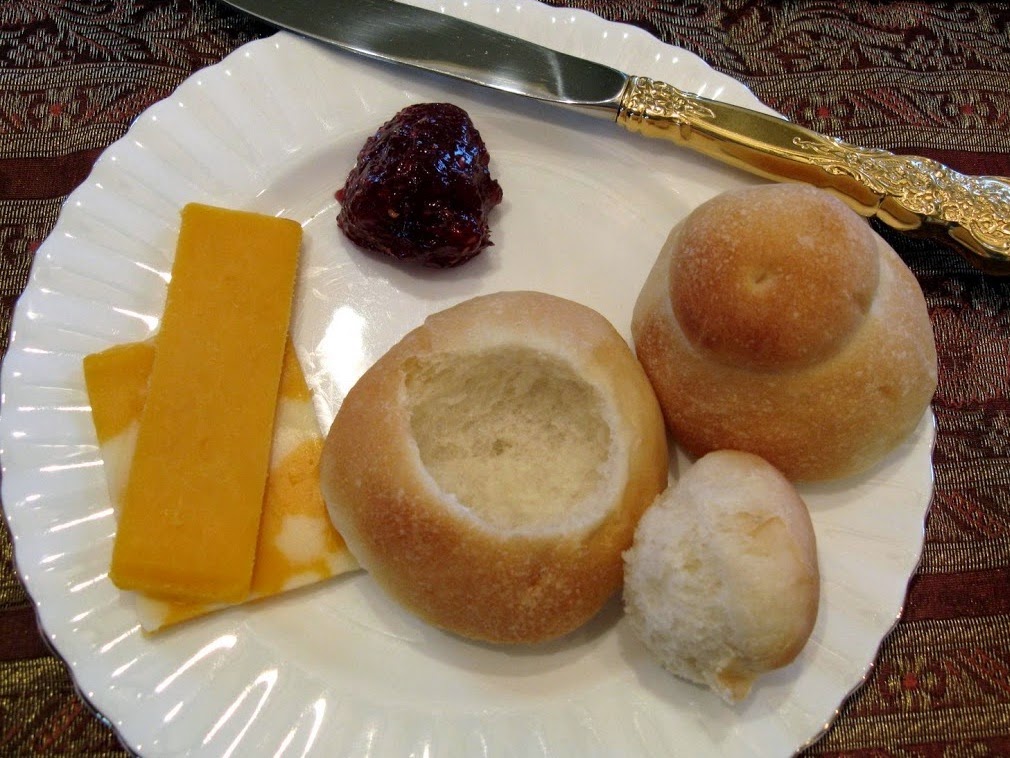
We would have Zwieback again Sunday evening for Faspa. Faspa is a light evening meal, almost just a snack. For Faspa we had Zwieback, good sharp or mild cheese from the local creamery, and again canned fruit (I especially remember the raspberries, we had a ton of them).
From early times, Zwieback in Mennonite circles referred to freshly baked buns that were in two parts. We would break them apart and put homemade jam on them. When these buns started to get stale, which was quite quickly, Mom would slice them and toast them in the oven producing Reeschkje, a toasted dried bun as described above. We would eat these with a mixture of coffee, milk and sugar. What a treat for us. Yes, we children were allowed to have coffee, only at this one time with Reeschkje.
In my upcoming book, The Long Trek, I mention that Gertie prepares Reeschkje to take on their long trip. Her mouth was salivating at the thought of having Reeschkje to dip her morning coffee.
In my next newsletter, I will share a recipe for molasses cookies that may have been like the ones Gertie baked for the trip. Molasses cookies also had the reputation of being good travelers. I even have a recipe for Molasses Almond Peppernuts which would have traveled well.
For more information about all the traditions and special handling of Zwieback check out the book Mennonite Foods & Folkways from South Russia, Vol. 1, by Norma Jost Voth, publ. by Good Books, Intercourse, PA in 1990.
Photo from http://www.mennonitegirlscancook.ca/2015/01/zwieback.html



 Marilynn Lester
Leave a comment